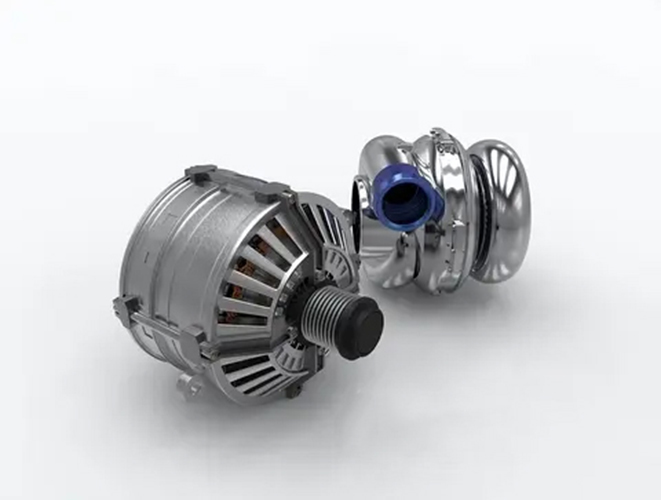
A car turbocharger is a technology that uses the exhaust gas discharged from the engine to drive an air compressor. It can increase the intake air volume by compressing air, thereby enhancing the engine's output power and efficiency.
The main functions of automotive turbochargers are as follows:
Increase the power and torque of the engine. A turbocharger can increase the amount of air entering the cylinders of an engine of the same displacement, thereby increasing the amount of fuel burned and enhancing the engine's power and torque. Generally speaking, a turbocharger can increase the maximum power of an engine by 20% to 40% and the maximum torque by 30% to 50%.
Reduce the fuel consumption and emissions of the engine. A turbocharger can make the engine burn more completely, improve the thermal efficiency of the engine, and thereby reduce the fuel consumption and emissions of the engine. Generally speaking, a turbocharger can reduce the fuel consumption of an engine by 5% to 10%, and the emissions of harmful gases such as CO, HC, and NOx are also reduced accordingly.
Improve the adaptability and reliability of the engine. A turbocharger can enable the engine to maintain good performance and stability under different altitudes, temperatures, and loads, avoiding problems such as insufficient power, knocking, and overheating. A turbocharger can also extend the engine's lifespan and reduce the engine's failure rate.
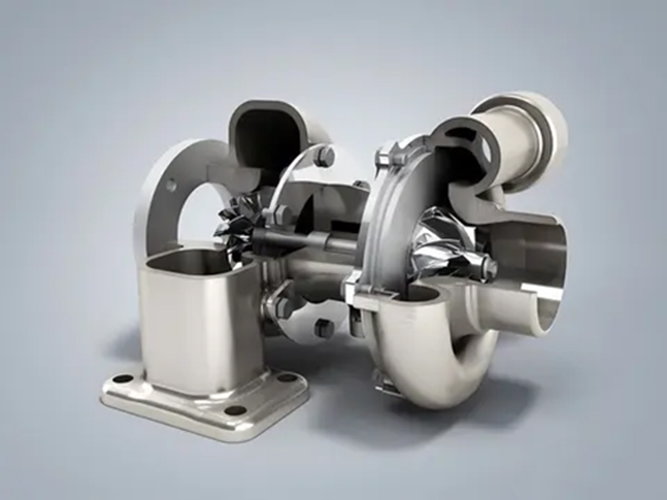
The classification of automotive turbochargers mainly includes the following types:
By drive mode, they can be classified into mechanical superchargers and turbochargers. A mechanical supercharger is an air compressor driven by the engine's crankshaft or belt. It can provide stable supercharging effect, but it also consumes part of the engine's power, increases the engine's weight and cost. A turbocharger is an air compressor driven by the engine's exhaust gas. It can utilize the energy of the exhaust gas to improve the engine's efficiency, but it also generates certain lag and noise.
By structural form, they can be divided into single turbochargers and twin turbochargers. A single turbocharger refers to a supercharger with only one turbine and one compressor. Its structure is simple and it is easy to install, suitable for small-displacement or low-power engines. A twin turbocharger refers to a supercharger with two turbines and two compressors. Its structure is complex and difficult to install, suitable for large-displacement or high-power engines. Twin turbochargers can be divided into two types: parallel and series. The former means that the two turbochargers work simultaneously, while the latter means that the two turbochargers work in sequence.
By control mode, they can be classified into fixed and variable turbochargers. A fixed turbocharger refers to a turbocharger with fixed blade angles and shapes. Its advantages are simple structure and low cost, but its disadvantages are that it cannot be adjusted according to the engine's speed and load, and it is prone to lag and overcharging. A variable turbocharger refers to a turbocharger with variable blade angles and shapes. Its advantages are that it can be adjusted according to the engine's speed and load to improve the supercharging effect, but its disadvantages are complex structure, high cost and difficult maintenance.