

What is a gasoline pump?
The oil pump is a device in the car's lubrication system that increases the oil pressure to help the oil from the oil pan reach other lubricated components. Without an oil pump, it would be difficult for the oil to travel from the oil pan to the various friction parts, and its lubricating effect could not be effectively exerted. Additionally, the oil pump can store a certain amount of oil. Once the car's oil pump starts working, through the volume changes of the working units (such as gears, rotors, vanes, etc.) inside the pump body, the oil in the oil pan is drawn out, passes through the oil strainer, and enters the oil pump. The oil at the outlet of the oil pump has a certain oil pressure, allowing it to pass through the oil filter and then enter the main oil passage and various components that need lubrication (such as pistons, valves, camshafts, etc.). The oil pump is equivalent to the heart of the lubrication system.
The function of the oil pump in a car engine
When the engine is running, the oil pump keeps working to ensure that the engine oil circulates continuously in the lubrication system. Under all operating conditions of the engine, the oil pump should supply sufficient lubricating oil. Since the speed of the oil pump is directly proportional to the speed of the engine, the oil supply capacity of the oil pump is the poorest at low speeds. Therefore, when designing, it should be considered that the oil pump has sufficient oil supply at low speeds.
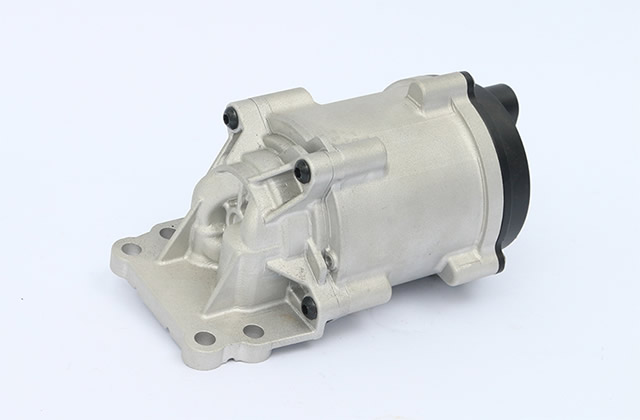
Is there a connection between the car oil pump and power?
Yes. Insufficient pressure in the car's fuel pump can lead to symptoms such as insufficient driving power, weak acceleration, and stalling. The most obvious feature is that the vehicle cannot start because the fuel cannot be sprayed into the engine, and ignition cannot occur. If you don't hear the sound of the fuel pump working in the fuel tank when turning the key or pressing the start button, or if there are intermittent power interruptions, especially during acceleration or high-speed driving, these are all signs of a problem with the fuel pump.
The location of the oil pump in a car engine
The automotive oil pump is generally installed inside the engine, usually within the oil pan. When the oil pan is opened, it can be seen. There is a filter screen connected below the oil pump, and the part above the filter screen is the oil pump.
The built-in oil pump is integrated with the assembly and is vertically installed in the oil tank. Its features include low noise, less prone to air resistance, safety, and simple installation of pipelines.
The external oil pump is connected in series in the external fuel supply pipeline of the oil tank. Its features include greater installation freedom, easy replacement, and high requirements for air tightness.
At present, the fuel pump of most vehicle models is installed in the car fuel tank and driven by electricity. The fuel pump consists of three parts: the pump body, the permanent magnet motor, and the housing.
The principle of the automotive engine oil pump
When the engine is running, the drive gear on the camshaft drives the transmission gear of the oil pump, causing the driving gear fixed on the driving gear shaft to rotate, which in turn drives the driven gear to rotate in the opposite direction. This action sends the oil from the oil inlet chamber along the tooth gap and the pump wall to the oil outlet chamber. As a result, a low pressure is formed at the oil inlet chamber, creating a suction force that draws the oil from the oil pan into the oil chamber. Due to the continuous rotation of the driving and driven gears, the oil is constantly being pressurized and sent to the required parts.