

I. What is an oil pump
The high-pressure oil pump is an oil pump inside the engine. Its function is to raise the engine oil to a certain pressure and then force it to be delivered to the moving surfaces of various engine parts to ensure a certain amount of oil. The oil pump is the power source for the oil circulation in the engine lubrication system. It is installed at the lower part of the engine cylinder block. When it rotates, it pressurizes the oil in the oil pan and discharges it to the lubricating oil circuit. After being filtered by the oil filter, it enters the surface of the components that need lubrication.
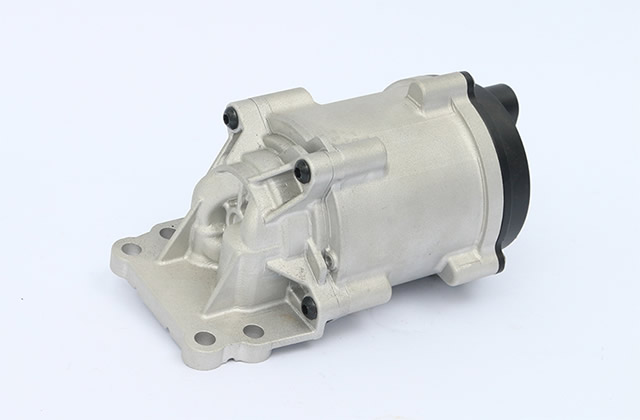
Ⅱ. What parts does an oil pump consist of
Oil pumps are classified into two types based on their structural forms: gear-type oil pumps and rotor-type oil pumps.
1.The gear-type oil pump is composed of two identical gears and a pump housing. Its specific components include the end cover, the drive shaft of the oil pump, the housing, the driven gear, the driven gear shaft, the driving gear, the pressure-limiting valve and the drive gear, etc.
2. The rotary oil pump is composed of a casing, an inner rotor, an outer rotor and a pump cover, etc. The inner rotor is fixed on the rotor shaft with keys or pins and is directly or indirectly driven by the crankshaft gear.
Ⅲ. What is the working principle of a car oil pump
The structures of automotive oil pumps vary, and so do their principles!
1.The principle of a gear-type oil pump: When the engine is running, the driving gear on the camshaft drives the transmission gear of the oil pump, causing the driving gear fixed on the driving gear shaft to rotate and driving the driven gear to rotate in the opposite direction, thus sending the engine oil from the oil inlet chamber along the tooth clearance and the pump wall to the oil outlet chamber. A low pressure is formed at the oil inlet chamber to generate suction, drawing the engine oil from the oil pan into the chamber. Due to the continuous rotation of the driving and driven gears, the engine oil is constantly forced to the required parts.

2. Principle of Rotor Oil pump
The inner and outer rotors of the rotary oil pump rotate in the same direction but not synchronously. The tooth profile and tooth profile of the rotors are designed so that when the rotors rotate to any Angle, the tooth profile lines of each tooth of the inner and outer rotors can always make point contact with each other. In this way, four working chambers are formed between the inner and outer rotors. As the rotors rotate, the volumes of these four working chambers are constantly changing. On one side of the oil inlet passage, there is an empty cavity. Due to the rotor disengaging from the meshing, the volume gradually increases, creating a vacuum. The engine oil is drawn in. As the rotor continues to rotate, the engine oil is carried to the side of the oil outlet passage. At this point, the rotor just enters the meshing, reducing the volume of this cavity, increasing the oil pressure, and the engine oil is squeezed out from between the teeth and sent out through the oil outlet passage. In this way, as the rotor keeps rotating, the engine oil is constantly sucked in and pressed out.
