

The inner surface of the cylinder due to the role of high temperature and high pressure gas, and contact with the high-speed moving piston and easy to wear, when the wear exceeds the use of time limit, it needs to be repaired. The usual repair method is to rework the cylinder into the cylinder liner made of high-quality material, restoring the original geometry.
For the use of aluminum alloy materials for the engine cylinder, because the aluminum alloy itself is not wear-resistant, so in the manufacture of the cylinder steel sleeve.
Therefore, the installation of cylinder liner avoids direct friction between the piston connecting rod and the cylinder block. Thus, the service life of the engine is extended, and the future maintenance work is convenient.
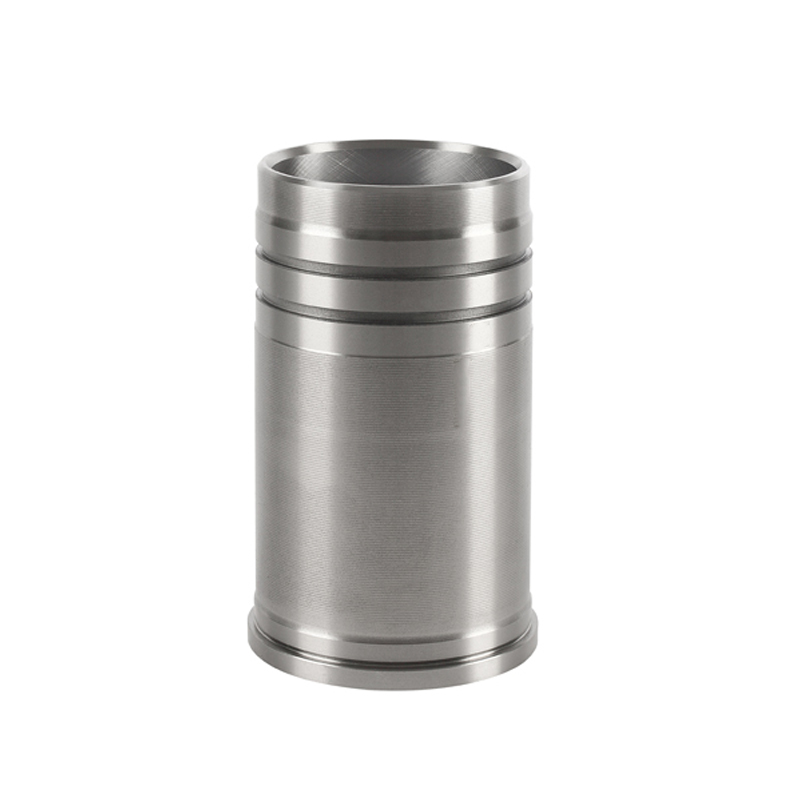
Classification:
According to whether it is in direct contact with the coolant, it can be divided into dry cylinder liner and wet cylinder liner.
1. Dry cylinder liner
The outer surface of the dry cylinder liner is not directly in contact with the coolant, and the wall thickness is 1~3mm, in order to ensure the heat dissipation effect and the positioning of the cylinder liner. The outer surface of the cylinder liner and the inner surface of the cylinder liner hole of the cylinder block have higher machining accuracy, and a certain amount of interference is used to fit the cylinder into the cylinder liner hole.
Features: not easy to leak water, small core distance of air leakage cylinder, compact structure, good stiffness of cylinder structure, long life, no contact with coolant.
Disadvantages: poor heat dissipation effect, maintenance and replacement inconvenience. Mostly used for small engines.
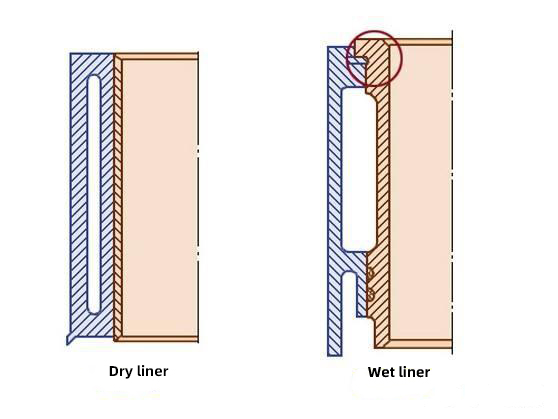
2. Wet cylinder liner
The wall thickness of the outer surface in direct contact with the cooling water is generally 5~9mm.
Features: There is no closed water jacket on the cylinder block, easy to cast, easy to repair and replace, and good heat dissipation effect.
Disadvantages: the stiffness of the cylinder block is poor, easy to produce cavitation, easy to leak, water leakage, poor life, poor sealing.
It is mostly used on large and aluminum cylinder bodies.
The water channel hole is larger than the oil channel hole, the smaller the oil channel hole, the greater the pump oil pressure, the better the lubrication effect.